
What should you buy on Dhanteras 2026? Gold, silver, a new utensil, a broom and clay diyas are five traditional choices. Each carries a different meaning, from prosperity and nourishment to the simple act of preparing your home for Diwali. This year, Dhanteras falls on Friday, 6 November 2026.
Perhaps your family places a silver coin beside the puja thali every year. Or perhaps you remember coming home with a new steel bowl and helping arrange diyas at the entrance. The items may be different, but the custom gives families a moment to pause, take care of their homes and reflect on what they are grateful for. If you’re making your Dhanteras shopping list, here’s what each of these five purchases can represent and how to choose something that fits your home and budget.
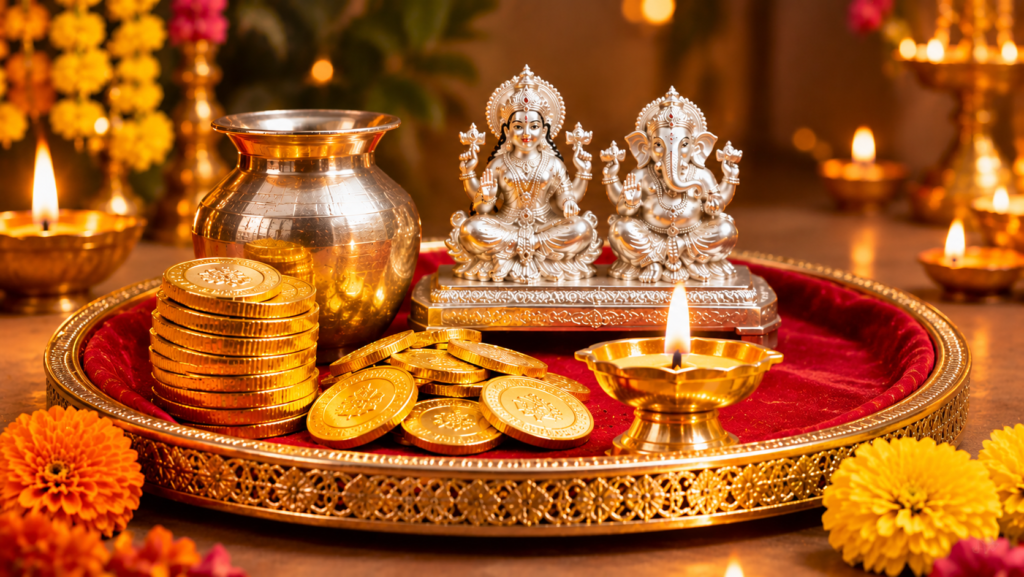
Why Do People Buy Something New on Dhanteras?
Dhanteras, also known as Dhantrayodashi, is observed on Trayodashi, the thirteenth lunar day of the waning fortnight. It marks the beginning of Diwali festivities in many households. The day is associated with prayers for health and prosperity. Devotees remember Lord Dhanvantari, who, according to the story of Samudra Manthan, emerged from the churning of the ocean carrying a vessel of amrit. Many families also worship Maa Lakshmi and Lord Kubera in the evening.
Buying something new is a popular household custom, and the choice often reflects what a family values or needs. A coin may be kept for future pujas. A serving bowl may be used every time the family gathers. Understanding the meaning behind each item can make it easier to decide what deserves a place on your list.
5 Auspicious Things to Buy on Dhanteras 2026
| What to buy | What it can symbolise | A simple choice |
|---|---|---|
| Gold | Prosperity and care for what you have earned | A small pendant or coin |
| Silver | An auspicious beginning and a link to family worship | A silver coin or small bowl |
| A new utensil | Nourishment and a well-provided household | A thali, serving bowl or glass |
| A broom | Cleanliness and a fresh start | A broom suited to your home |
| Clay diyas | Light, hope and reflection | A few earthen lamps for the puja or entrance |
These meanings reflect popular traditions and symbolic interpretations. Customs vary by region and household.
1. Gold for Prosperity and Care for What You Have Earned
Gold is one of the best-known Dhanteras purchases. Its association with prosperity makes it a natural choice for families who mark the festival with a coin or a piece of jewellery. A gold item can also carry a personal meaning. A pendant worn on family occasions or a coin kept with festive keepsakes can become a reminder of the year you bought it and the people you celebrated with.
What to choose: If you already plan to buy jewellery, consider something you’ll wear regularly, such as a small pendant or simple earrings. If your family prefers a ceremonial purchase, a small coin may suit the occasion. Decide what you’re comfortable spending before you visit the shop and compare the total billed price before choosing.
2. Silver for an Auspicious Beginning
A silver coin is another familiar choice for Dhanteras. Some families place it near the puja thali and bring it out again for future festivals. In that setting, its meaning comes partly from repetition. The same small object becomes part of a ritual that children see and eventually help prepare. Silver is traditionally considered an auspicious purchase on the day, and the item you choose can be as simple as a coin or a small bowl.
What to choose: Pick a coin if you want something easy to keep with your puja items. If you prefer something that has a place in the ceremony itself, consider a small bowl you can use for offerings. You can also bring out a silver piece that has been in your family for years and make it part of this year’s puja.
3. A New Utensil for Nourishment and Hospitality
Bringing home a new utensil is one of the most widely practised Dhanteras shopping customs. A vessel holds what sustains the household, whether it’s water, grain or a meal prepared for family and guests. That everyday purpose gives the purchase its spiritual meaning. A new vessel can also recall the story of Lord Dhanvantari carrying a pot of amrit, a traditional image connected with prayers for health.
What to choose: Think about what you’ll use after Diwali. A steel thali can be part of everyday meals. A serving bowl can come out when guests visit. If the utensil is specifically for puja, a small plate or bowl may be enough. Choose the size and material according to how you plan to use it.
4. A Broom for Cleanliness and a Fresh Start
A broom may seem like the most ordinary item on a festive shopping list, but it has a place in Dhanteras folk tradition. Some households associate it with clearing away what has accumulated over the year and welcoming Maa Lakshmi into a clean home. The purchase can also be a reminder to finish a small task you’ve been putting off, such as clearing the entrance or making space around the puja corner.
What to choose: If your household follows this custom, buy a broom that suits your flooring and that you’ll use regularly. Make the preparation manageable by picking one area that would make the biggest difference. Clearing a crowded doorstep can be more satisfying than trying to reorganise the whole home on the day of the festival.
5. Clay Diyas for Light and Hope
Lighting a diya is among the simplest ways to mark the evening. Its flame can symbolise hope and offer a quiet moment for prayer as the household gets ready for Diwali. Some families also observe Yam Deepam, a separate Dhanteras tradition in which a lamp is dedicated to Lord Yama. If your family follows this practice, set aside a lamp for it and follow your customary timing and placement.
What to choose: A few clay diyas, cotton wicks and the oil or ghee your family uses are enough to prepare for the evening. You could keep one diya for the puja, one for the entrance and another for Yam Deepam if you observe it. Setting the lamps out in advance leaves more time to light them together and sit for the puja.
When Should You Shop on Dhanteras 2026?
According to Drik Panchang, the Trayodashi Tithi begins at 10:30 AM IST on 6 November and ends at 10:47 AM IST on 7 November. If you follow a shopping muhurat, look up the purchase timings or Choghadiya for your city. The evening puja muhurat is listed separately. For example, Drik Panchang lists 12:05 PM to 1:27 PM on 6 November as a Shubha Choghadiya for buying gold in New Delhi. Use the Panchang for your own location when planning your purchase.
How to Make Your Dhanteras Shopping List
Start with one question: What would be meaningful or useful in our home this year? If you want to keep a family custom, choose the item your household associates with that tradition. If you want something you’ll use every week, pick a utensil that fills an actual need. If you mainly want to prepare for the evening puja, put diyas and supplies first.
Set your budget before shopping and choose one item to prioritise. You can also reuse what you already have. An old silver coin placed next to a newly lit clay diya can bring together a family tradition and something new without turning the day into a long shopping trip.
Frequently Asked Questions
What is the best thing to buy on Dhanteras 2026?
A new utensil is a useful choice for most households. If your family prefers a keepsake for puja, consider a silver coin. Choose the item that fits your household tradition, intended use and budget.
Can I buy a steel utensil on Dhanteras?
Yes. Steel utensils are among the household items commonly purchased for Dhanteras, alongside brass, copper and silver. A steel thali, bowl or glass is an option if you want something you can use regularly.
Is buying gold necessary on Dhanteras?
Buying gold is a popular custom. Families also mark the occasion with silver, a new utensil, diyas or a simple evening puja according to their own traditions.
Why do some people buy a broom on Dhanteras?
In some households, buying a broom symbolises cleanliness and preparing the home to welcome Maa Lakshmi. It is a folk custom that varies across families and regions.
